48 - Conquering the Bravery Recession: Why Leaders Must Embrace Fear to Thrive in Uncertain Times
The Bravery Effect: How to Overcome Fear, Build Resilience, and Lead with Courage
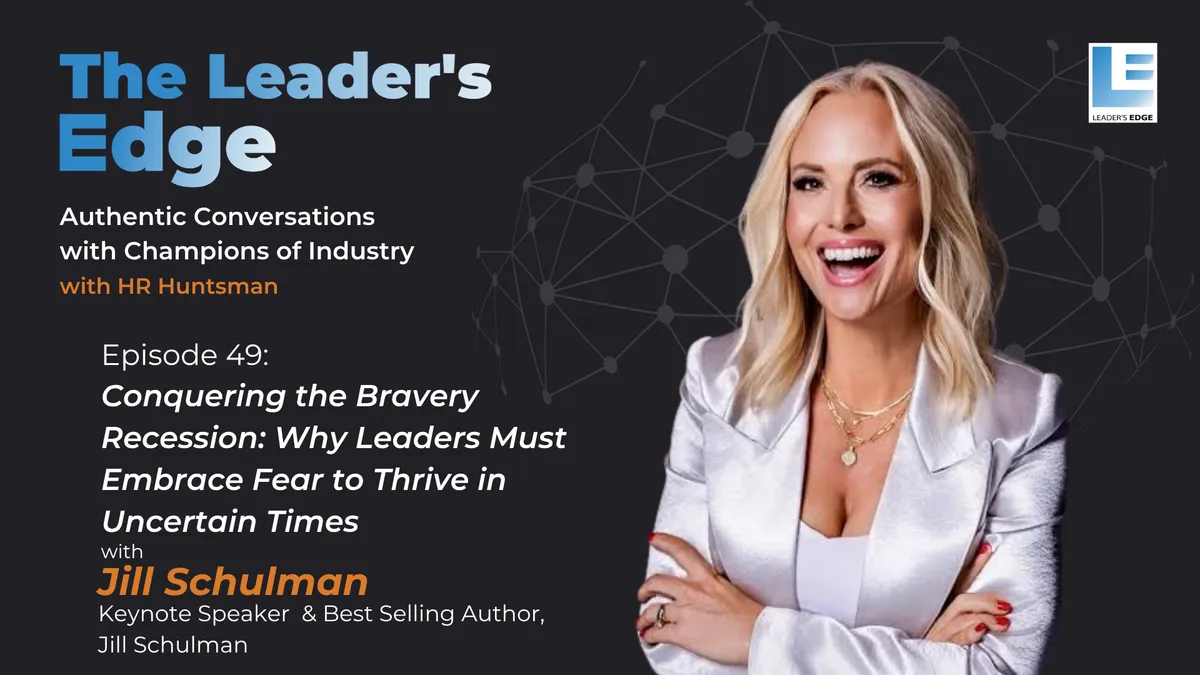
In this episode of Scaling Smarter: The Leader’s Edge Podcast, host HR Huntsman sits down with Jill Schulman, Keynote Speaker, Best Selling Author, and host, to explore how executives can break free from the "bravery recession" and build resilient, courage-driven organizations. Drawing from her background as a former Marine Corps officer candidate, author, and keynote speaker, Jill shares how confronting discomfort transforms leadership capacity. This conversation offers founders, CEOs, and executive teams a practical framework for overcoming fear-based hesitation, facilitating difficult conversations, and converting daily friction into long-term strategic success.
Breaking the Bravery Recession in Executive Leadership
In today's fast-paced corporate environment, leaders frequently fall victim to a subtle yet destructive trend: the systemic avoidance of discomfort. Jill Schulman identifies this phenomenon as a "bravery recession," where executives delay tough conversations, freeze in the face of uncertainty, or settle for comfortable benchmarks out of fear of failure. When leaders avoid direct feedback or hesitate during critical decision-making windows, organizational alignment quickly degrades. Overcoming this friction requires shifting from avoidance to intentional exposure, recognizing that micro-bravery—the daily practice of confronting small uncomfortable tasks—is the key to expanding executive capability.
Building true organizational resilience requires distinguishing between physical grit and social courage within your leadership team. Executives may comfortably handle high-stakes financial risks yet freeze when required to deliver candid, empathetic performance reviews or navigate interpersonal conflict. By implementing "voluntary discomfort," leaders can condition their prefrontal cortex to remain objective under extreme pressure. By normalizing vulnerability and modeling transparent communication, founders create a culture of psychological safety where team members process mistakes productively rather than hiding errors behind corporate bravado.
Ultimately, true bravery must be decoupled from reckless ego and anchored directly to purpose. Strategic courage is not about taking uncalculated risks to impress industry peers; it is the deliberate choice to act in alignment with long-term organizational values despite the presence of fear. By leveraging "borrowed confidence" from trusted mentors and evaluating hesitation through the lens of long-term vision, executives can break through operational inertia. Leaders who embrace this compound effect of daily courage build organizations that adapt faster, retain top talent, and thrive through market disruption.
About Jill Schulman
Jill Schulman is an accomplished Keynote Speaker, Best Selling Author, and former Marine Corps officer candidate who specializes in helping organizations build courageous cultures. Drawing on her unique synthesis of military discipline, behavioral science, and corporate leadership, Jill delivers high-impact presentations on resilience, fear management, and executive performance. She is the author of The Bravery Effect, guiding leaders worldwide to cultivate micro-bravery and overcome the systemic challenges of workplace anxiety and risk avoidance.
About Jill Schulman
Jill Schulman’s platform provides executive keynotes, corporate workshops, and strategic coaching programs designed to help teams conquer fear and drive high-performance cultures. Focused on turning behavioral science into actionable workplace practices, her work equips leaders to navigate complex organizational transitions, master difficult conversations, and build sustainable resilience. Through engaging presentations and practical training frameworks, she empowers enterprise teams to replace hesitance with confident action.
Links Mentioned in This Episode
Guest Company: Jill Schulman
Guest LinkedIn: Jill Schulman on LinkedIn
Key Episode Highlights
The "Bravery Recession": How societal avoidance of discomfort undermines executive resilience and breeds organizational anxiety.
Micro-Bravery Framework: The daily practice of facing small fears to systematically build long-term leadership capacity.
Social vs. Physical Courage: Why high-performing leaders often struggle with interpersonal vulnerability despite excelling under operational stress.
Overcoming Fear-Based Hesitation: Practical tools to differentiate between wise discernment and avoidant procrastination during high-stakes decisions.
Purpose Driven Courage: The critical distinction between strategic bravery and reckless ego-driven risk-taking.
Conclusion
Jill Schulman’s insights demonstrate that courage is not an innate trait reserved for a select few, but a trainable skill built through daily, intentional choices. By confronting fear, encouraging open dialogue, and grounding actions in clear organizational purpose, leaders can break through friction and build high-performing, resilient teams.
To gain a sharper strategic edge and access expert resources for scaling your business and executive leadership, visit Your Leader’s Edge today.
Are you a founder, CEO, or industry leader with a compelling story of resilience and organizational growth? We’d love to feature your journey. Apply to be a guest on Scaling Smarter: The Leader’s Edge Podcast here.